Category Archives: Philosophy

STAYING OUT OF HOSPITAL

This is in response to this article published on news.com.au

I always say, there are four main overarching reasons to end up in hospital, often a combination of these:
1) Elderly
2) Obesity
3) Foolish
4) Unlucky

Unfortunately for some, for whatever reasons (genetics, some unique circumstances or environmental exposure or who knows), they can do everything in their power and still get sick, like this poor man, who falls into the least common category of being exquisitely unlucky.

But the message here is not that we shouldn’t bother; because there are still plenty of other of ways in which we can end up in hospital, through aging poorly, eating poorly, gaining excessive weight and negatively affecting our body composition, or doing something stupid like getting addicted to drugs/alcohol/cigarettes or jumping off a roof while we’re drunk.

This man is in hospital by fate of misfortune; but his fellow hospital mates are there by their own design, and he is not impressed.

The point is, as expressed in the disgust this man has for his fellow patients: though on rare occasions sickness can’t be avoided, in the case of the 99.99999% of other reasons that it can be avoided, we should put in the effort and do the right things to stay out of the hospital. Because in the vast majority of the time it can be avoided, and thus we should not take our health for granted.

It is to the benefit of ourselves, and to our fellow man by the examples we set and the community resources we save by not ending up in hospital, that we do our best, within reason, to maintain as high a level of health as we can.

475682-f2ddb5d6-d407-11e3-b5be-ec06717bccf7

SOCIAL ANXIETY: AN ANALOGY

AN ANALOGY: Dealing with SOCIAL ANXIETY is like learning to swim. If you’re worried about how cold the water is when you hit the surface, then you won’t get in, will never get comfortable with getting wet and never swim well. 

But once you force yourself past that troublesome barrier with a dive or pindrop, the initially uncomfortable feeling of shock when entering that cold water, start to warmup and move around, you may start to even enjoy it.

Even if swimming isn’t your thing, the more you push past that barrier, and the more you try, the easier it gets, and the more you can allow yourself to get comfortable with swimming, which you could not access before because of that disdain aand avoidance of the discomfort of the transition from dry to wet.

Like social situations, your sticking point may be getting past that coldness, and that transition from disengaged to engaged in the social situation. The more practice you get, the colder the water you can tolerate.

Just like with anything, training yourself to do this is all about repetition and internalising new habits. 

I’ve watched this video a few times as I’ve never really stopped to think about it in detail. This is an interesting idea. It’s a vague word, layered with multiple vague meanings. Be concerned and cautioned if someone calls you “nice” or you feel that someone else is being “nice”.

I HATE being called nice. I consider it the worst insult to my being. I KNOW that when someone calls me “nice”, they don’t really mean I’m kind or generous. They mean I’m a fucking pushover. Are you a fake, pretending to be something you are not? Are you weak, pretending or hiding that you are bothered by something?

Nobody calls me kind, generous, or a good person. They say “nice.” Clearly that means something completely different. It means there is a lack of congruence between your internal state and what you are projecting externally. It makes me question who I really am, who I am “being”.

Origins of the word:
Middle English (in the sense ‘stupid’): from Old French, from Latin nescius ‘ignorant’, from nescire ‘not know’. Other early senses included ‘coy, reserved’, giving rise to ‘fastidious, scrupulous’: this led both to the sense ‘fine, subtle’ (regarded by some as the ‘correct’ sense), and to the main current senses.

I think the original definition of the word speaks for itself. Something to reflect upon.

Watch Elliot Hulse’s video about being “nice” here on Youtube:

https://www.youtube.com/watch?v=SPDPtt-eCn0
 

BEING ALONE vs LONELINESS: A SOCIAL HEALTH ISSUE?

As I sit alone on my bed on a Saturday night, in my tiny place, still a relative newcomer to this city, with my Laptop, social media, writing pad, and football on TV to keep me company, I wonder if can be alone without being lonely. It’s a feeling that comes and goes; perhaps I am better off than most.

This is a nice article on the matter from the Sydney Morning Herald, check it out!

Quotes from the article:
“Douglas, meanwhile, touches on the elemental factor about loneliness: it’s a matter of perception. “Everyone’s problems are relative to themselves,” he says. “That’s why it’s so difficult for someone like me to talk to people about this – people would kill to have my problems.””

“Says ANU researcher and clinical psychologist Jay Brinker: “It is not objective social isolation that is the culprit, but the perception that one’s social interactions are inadequate or deficient.””

“But out to dinner, at a game, we can be lonely too – lonely in a crowd. It’s a feeling of separation: nose pressed against window, seeing but not connecting; an icy river, a gorge, a moat between one and the rest.”

“I feel relieved to be in fine company: on his blog, the English actor Stephen Fry, who has been open about his struggle with mental illness, recently wrote of the sensation. “I am luckier than many of you because I am lonely in a crowd of people who are mostly very nice to me and appear to be pleased to meet me.””

“Loneliness is usually a temporary state; isolating events such as relationship breakdowns or financial hardship mean people can move in and out of loneliness. Single parents and people like me who live alone are twice as likely to experience loneliness. Men are generally more vulnerable than women.”

“But “connections” and laughs aside, everything seems to point to the fact that technology is having a fundamental – and negative – effect on the way we interact with others and is actually contributing to the loneliness epidemic.”

“Technology celebrates connectedness, but encourages retreat,” he wrote. “Each step ‘forward’ has made it easier, just a little, to avoid the emotional work of being present, to convey information rather than humanity.”

“We wave our mobile phone about and proclaim how connected we are, he says, “but you can use them to avoid being human. I suspect that the next generation is going to be entirely skilled with these things and entirely unequipped for real human beings.” A relationship via a mobile phone, he says, is nothing like a relationship face to face.”

http://www.smh.com.au/lifestyle/life/all-the-lonely-people-20130826-2skkz.html

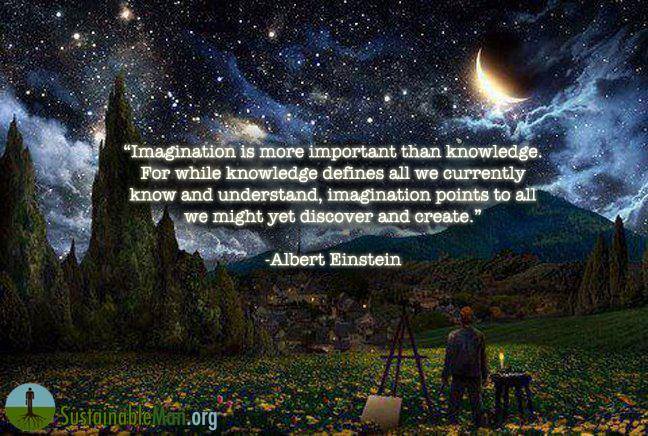
Imagination and Knowledge

You can always imagine and create what you haven’t been taught, or what might be. If school doesn’t enable you to think outside the confines of the previous body of knowledge, then are you any different to a programmed robot?

10171771_10152178419722909_1946487396366375558_n

As Bruce Lee said: “Absorb what is useful, discard what is not, and add what is uniquely your own.”

Design a site like this with WordPress.com
Get started